Alzheimer’s Disease
Alzheimer’s disease is the most common form of dementia, affecting memory, thinking, and daily life, especially among the elderly. This article explains its symptoms, stages, brain changes, and how families in India can better understand and support affected loved ones.

What Every Family Should Know About Alzheimer’s Disease in India
Alzheimer’s disease in India is becoming an increasing concern as the elderly population grows. Understanding its symptoms, stages, and care needs is essential for every family.
Alzheimer’s disease is the most common type of dementia. It accounts for around 60% to 80% of cases of dementia around the world. For many people who develop it, the condition typically starts at age 65 years or older. Alzheimer’s disease is a neurodegenerative condition. A buildup of plaques and tangles in the brain, along with cell death, causes memory loss and cognitive decline.
There is currently no cure, but drugs and other treatments can help slow or ease the cognitive, emotional, and behavioral symptoms and improve the person’s quality of life.
The following information quoted has been cited from the website of the Alzheimer’s Association, USA.
“In 1906, German physician Dr. Alois Alzheimer first described a peculiar disease, one of profound memory loss and microscopic brain changes — a disease we now know as Alzheimer’s. Today, Alzheimer’s is at the forefront of biomedical research. Researchers are working to uncover as many aspects of Alzheimer’s and other dementias as possible. Some of the most remarkable progress has shed light on how Alzheimer’s affects the brain. The hope is this better understanding will lead to new treatments. Many potential approaches are currently under investigation worldwide.”
Symptoms of Alzheimer’s Disease
“The most common early symptom of Alzheimer’s is difficulty remembering newly learned information. Just like the rest of our bodies, our brains change as we age. Most of us eventually notice some slowed thinking and occasional problems with remembering certain things. However, serious memory loss, confusion and other major changes in the way our minds work may be a sign that brain cells are failing.
Alzheimer’s changes typically begin in the part of the brain that affects learning. As Alzheimer’s advances through the brain it leads to increasingly severe symptoms, including disorientation, mood and behavior changes; deepening confusion about events, time and place; unfounded suspicions about family, friends and professional caregivers; more serious memory loss and behavior changes; and difficulty speaking, swallowing and walking.
People with memory loss or other possible signs of Alzheimer’s may find it hard to recognize they have a problem. Signs of dementia may be more obvious to family members or friends. Anyone experiencing dementia-like symptoms should see a doctor as soon as possible. Earlier diagnosis and intervention methods are improving dramatically, and treatment options and sources of support can improve quality of life.
Many people have trouble with memory — this does NOT mean they have Alzheimer’s. There are many different causes of memory loss. If you or someone you know is experiencing symptoms of dementia, it is best to visit a doctor so the cause can be determined.”
Alzheimer’s and The Brain
“Microscopic changes in the brain begin long before the first signs of memory loss. The brain has 100 billion nerve cells (neurons). Each nerve cell connects with many others to form communication networks. Groups of nerve cells have special jobs. Some are involved in thinking, learning and remembering. Others help us see, hear and smell.
To do their work, brain cells operate like tiny factories. They receive supplies, generate energy, construct equipment and get rid of waste. Cells also process and store information and communicate with other cells. Keeping everything running requires coordination as well as large amounts of fuel and oxygen.
Scientists believe Alzheimer’s disease prevents parts of a cell’s factory from running well. They are not sure where the trouble starts. But just like a real factory, backups and breakdowns in one system cause problems in other areas. As damage spreads, cells lose their ability to do their jobs and, eventually die, causing irreversible changes in the brain.”
The Role of Plaques and Tangles
“Two abnormal structures called plaques and tangles are prime suspects in damaging and killing nerve cells.
- Plaques are deposits of a protein fragment called beta-amyloid that build up in the spaces between nerve cells.
- Tangles are twisted fibers of another protein called tau (rhymes with “wow”) that build up inside cells.
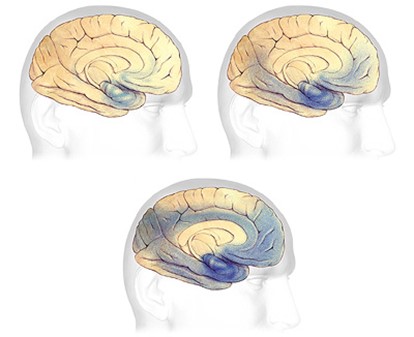
Though autopsy studies show that most people develop some plaques and tangles as they age, those with Alzheimer’s tend to develop far more and in a predictable pattern, beginning in the areas important for memory before spreading to other regions.
Scientists do not know exactly what role plaques and tangles play in Alzheimer’s disease. Most experts believe they somehow play a critical role in blocking communication among nerve cells and disrupting processes that cells need to survive.
Dementia vs. Alzheimer’s Disease in India : What Is the Difference?
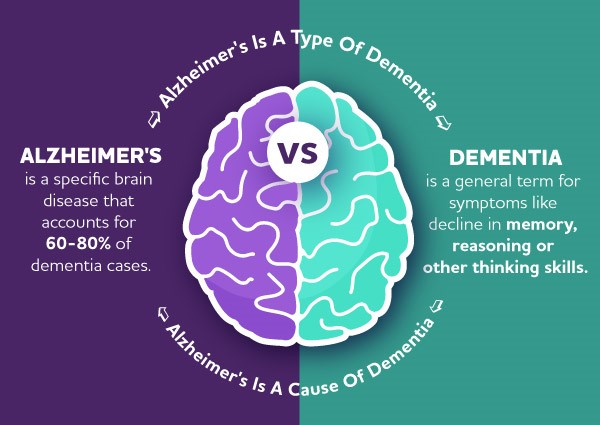
“In summary, dementia is an umbrella term that describes a collection of symptoms (cognitive, functional and behavioral) that are caused by specific diseases. Alzheimer’s disease is the most common disease that causes dementia, but Frontotemporal degeneration, Lewy Body disease, Vascular disease can all cause symptoms of dementia. Not all cognitive decline is considered dementia, dementia must be driven by an underlying progressive neurodegenerative disease.
Learning about the two terms and the difference between them is important and can empower individuals living with Alzheimer’s or another dementia, their families and their caregivers with necessary knowledge.”
Dementia Overview
Dementia describes a group of symptoms associated with a decline in memory, reasoning or other thinking skills. Many different types of dementia exist, and many conditions cause it. Mixed dementia is a condition in which brain changes of more than one type of dementia occur simultaneously. Alzheimer’s disease is the most common cause of dementia, accounting for 60-80% of dementia cases. Dementia is not a normal part of aging. It is caused by damage to brain cells that affects their ability to communicate, which can affect thinking, behavior and feelings.”
What are the 7 stages of Alzheimer’s?
- Stage 1: A person does not have any symptoms, but pathological changes are happening in the brain.
- Stage 2: Prodromal stage; mild memory loss, but generally this is indistinguishable from normal forgetfulness.
- Stage 3: Progression into mild cognitive impairment. People may get lost or have difficulty in finding correct wording.
- Stage 4: Moderate dementia; poor short-term memory. People forget some of their personal history.
- Stage 5: Cognition continues to decline, and people need help in their daily lives. They experience confusion and forget many personal details.
- Stage 6: Severe dementia; people require constant supervision and care. They do not recognize many of their family and friends and have personality changes.
- Stage 7: People are nearing death. They show motor symptoms, have difficulty communicating, experience incontinence, and require assistance in feeding.
