Fifteen Seniors, Two Countries, and the Quiet Work of Holding Everyone Together: A Senior Group Travel
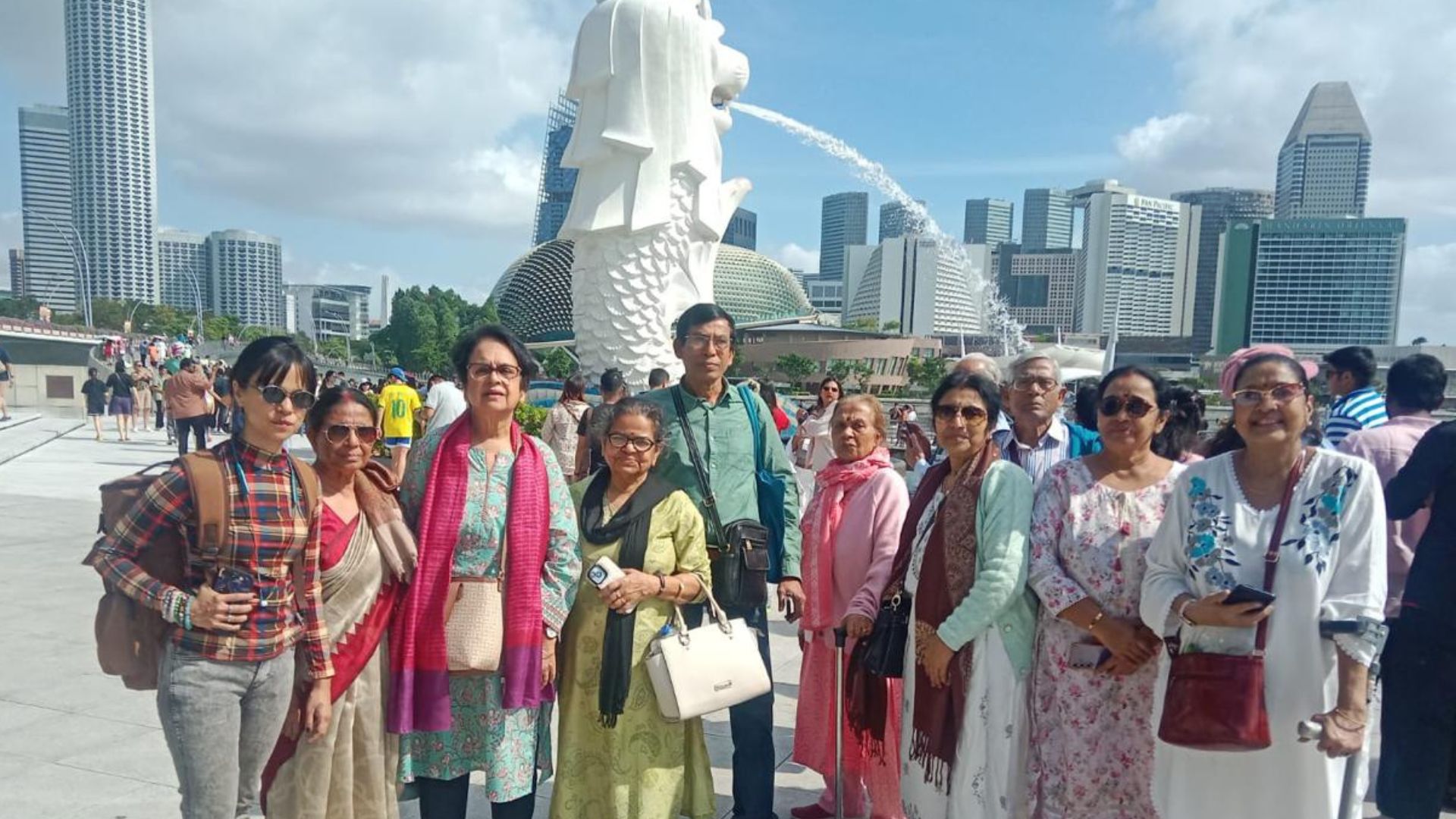
We did not plan the Singapore–Malaysia trip. The flights, hotels, and sightseeing were all organised by a travel agency, neatly packaged into an itinerary that looked efficient on paper and comprehensive in scope. There was a local tour guide in both the countries, and that sounded like in many ways, the hardest part had already been done. That was somewhat of a relief to me and to quite a few others who were travelling internationally for the first time.
And yet, once the journey began, it became clear that what makes a trip work, especially for a group of fifteen senior citizens, is not the itinerary itself, but what happens while you are bang in the middle of it.
Because no itinerary accounts for how long someone needs to sit before they can walk again, or how quickly a meal needs to arrive before fatigue turns into irritation, or how easily someone can get disoriented in a new place and fall behind imperceptibly.
That part, we realised, was ours to hold.
Coordinating the In-Between: Where the Real Work Happens
From the moment we landed at Changi Airport, the focus shifted from “what’s next” to “is everyone okay getting there.” The group moved together, but not always at the same pace, and that meant constantly adjusting without making it feel like an adjustment.
It was never about rushing to the next stop; it was about ensuring no one felt rushed while getting there.
At every transfer—whether it was boarding the bus, stepping out for sightseeing, or regrouping after a break—there was a quiet headcount, a quick scan, a moment of pause to make sure no one was missing or struggling, enough to keep the group intact, but not in a way to make it obvious such that it causes concern at any point.
The sightseeing itself, across places like Gardens by the Bay or later near Petronas Twin Towers, became less about covering everything and more about enjoying the experience in their own personal pace, so that the memories remain fulfilling, without exhaustion. Even though the schedule was pre-set, we found ourselves gently stretching or compressing time wherever possible, making sure people had the space to see what they wanted, take a break if needed, and not feel pulled away too quickly to the next point.
Meals became anchors in the day. Ensuring no one missed lunch, that everyone had eaten before energy dipped too low, that water was always within reach, that afternoon rest breaks were factored in – these small acts became the grounding moments of the entire group. Hunger and dehydration show up quickly in travel, and even more so with age, so preventing them became more important than any sightseeing stop.
Rest, too, had to be protected. Even when the itinerary moved forward, we made sure there were pauses—moments to sit, to step aside, to simply not keep up for a while without feeling left out of the experience. Shows were inserted in to the itinerary within the sightseeing spots, where they could sit, watch and experience magic, such as the Light and Sound Show ‘Wings of Time’ that provides rest and entertainment.
Holding People, Not Just Plans
Alongside movement and meals, there was another layer that required equal attention—people themselves.
Medications had to be carried, remembered, sometimes gently reminded. Bags had to include essentials without becoming burdens. And more than anything, there had to be a sense of calm running through the group, especially when the day became long or slightly unpredictable.
We found ourselves repeating things often, that were not instructions, but reassurances. That there was time. That no one would be left behind. That it was okay to slow down. That to ask for help is fine. That there is no inconvenience caused in asking for a washroom break should you need one.
Communication became a rallied system of its own. Regular check-ins, small updates, making sure everyone knew where the group was headed next and where they needed to be, what time was breakfast, when the day would start the next morning—these reduced the need for anyone to feel uncertain or anxious. In a new country, even a little clarity goes a long way, whether it is to tell them how long the journey will take from the hotel to the next sightseeing spot, or to tell them if they can go shopping for souvenirs for their grandchildren back home near where the sightseeing location is. Accommodating to what they need to the best extent possible becomes a priority, because the essential focus is for the trip to be adjusted around the seniors and not the other way around.
And then there was patience that cannot be scheduled, learnt, practised, prepared for, but must be sustained. Waiting while someone walked a little slower, pausing when someone needed an extra few minutes, answering the same question more than once without letting it show as repetition, without being irritable, like you would probably do when it comes to your family. These are not things that appear on itineraries, but they are what make them humane.
By the time we moved from Singapore into Malaysia, and settled into a different rhythm in Kuala Lumpur, it became clear that the success of the trip was not in how much we had covered, but in how comfortably we had moved through it together.
What stayed with me after we returned was not any one destination, but a clearer understanding of what sustains a trip like this. Travel—especially with older people, and in larger groups—rests on a layer of coordination that rarely gets acknowledged, something that sits quietly between planning and caregiving.
And yet, that care does not move in just one direction. Alongside the attention I found myself giving to the seniors in making sure everyone was accounted for, rested, and comfortable, there was an equally instinctive care that came back towards me. Someone noticing if I was carrying too much, another insisting I sit down for a bit, someone handing me a cup of coffee or a small teacake because they felt I hadn’t eaten enough at lunch. It was the kind of care parents offer without thinking, repeated gently across fifteen people, until it stopped feeling like gestures and simply became the atmosphere of the trip.
At some point, without anyone naming it, that exchange of care settled into something natural on both sides. And perhaps that is what travel like this ultimately becomes—not just movement across places, but the steady, mutual act of paying attention, so that no one must work too hard to feel looked after.
Need a professional home safety assessment?
Our team can assess your parent's home environment room by room, identify structural risks a checklist won't catch, and create a prioritised safety plan - starting at ₹999.
Book a Home Risk Audit