The Night I Decided to Come Back
For a while, I used to wake up at night with the same thought. My mother, alone in the flat. An emergency. The phone ringing and no one there to answer it.
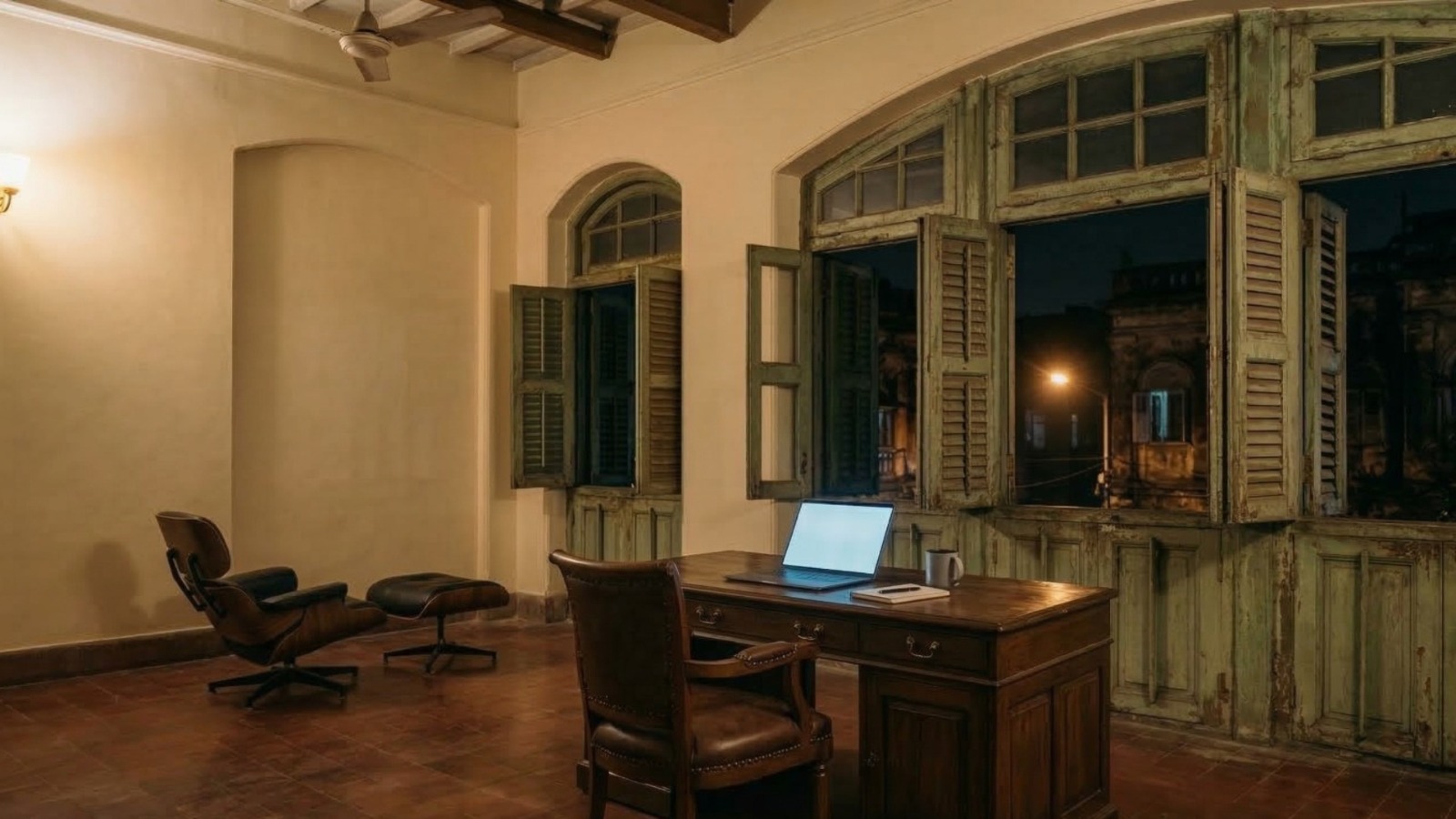
For a while, I used to wake up at night with the same thought. My mother, alone in the flat. An emergency. The phone ringing and no one there to answer it.
Not a dramatic thought. Just specific. The particular silence of a Kolkata flat at 3am, and the particular helplessness of being somewhere else entirely.
My mother is not someone who believes in depending on others. No help, no neighbours she’d call on, no arrangements she’d have accepted even if I’d tried to put them in place. Fiercely self-sufficient, her whole life. That is who she is, and I say it with complete respect.
Which meant there was no network to coordinate, no helper to brief, no fallback that wasn’t her. Just her, and the flat, and whatever happened at night.
I kept waking up.
“Her independence was not a problem to be solved. It was a fact to be respected. What I needed was a way to hold that — to care without intruding. I looked for it. It didn’t exist.”
The particular problem of a parent who doesn’t want help
Most writing about elder care assumes a network — helpers, neighbours, family nearby. It assumes the problem is coordination: too many people with partial information, no one empowered to act.
My mother’s situation was different. She wouldn’t have wanted coordination. She wouldn’t have opened the door to a care service, or accepted a check-in call, or admitted that anything had changed. Her independence is not a personality quirk. It is her identity. It is, honestly, something I inherited.
What kept me awake wasn’t the coordination problem. It was the simpler, harder one: a woman who would be fine right up until she wasn’t, and who would not have told me either way.
Many families I’ve worked with have a version of this parent. Strong, private, resistant — not difficult, just formed by a generation that did not ask for things. Understanding that resistance, working with it rather than against it, is one of the things that distinguishes care done well from care done at the person rather than for them.
I came back to Kolkata partly because of that recurring thought. And when I looked for the kind of service I’d imagined — one that understood this, that could work with a person like my mother on her own terms — I found it didn’t exist. Not in the form I needed.
So we built it.
The thing about distance that compounds
If you live in the same city as your parents, change is gradual. You notice it slowly, the way you notice a child growing — not day to day, but in the accumulation of days.
If you live in another city, or abroad, change arrives in a wave. The parent you see in December is visibly different from the parent you saw in April, and that compression is disorienting. You find yourself recalibrating, every visit, to a new baseline you weren’t prepared for.
What I’ve learned, from years of working with families who are managing elderly parents in Kolkata from elsewhere in India or from abroad, is that this distance is manageable — but only if the information you’re getting is honest and continuous. Not filtered through someone who doesn’t want to worry you. Not reconstructed from WhatsApp messages at midnight. Actual, reliable, ground-level truth.
The families who sleep well are not the ones who call twice a day. They are the ones who have someone on the ground whose job it is to tell them the truth.
What we actually built
Tribeca Care was not built for the catastrophic moment. Most families, most of the time, don’t need emergency care. They need the chronic uncertainty managed — the ongoing question of whether things are actually fine, or just appearing to be.
We work with families across Kolkata: some where the parent lives alone, some with household help, some with family nearby and some with no one within three hours. What they share is not a medical situation. It’s a coordination problem. The right information, reaching the right person, in time to make a difference.
My mother has dementia now, following a stroke five years ago. My sister is in Kolkata. My niece, who has worked at Tribeca for eleven years, is closer than most. And still — I understand, more than I would like, what it means to manage the gap between the information you have and the information you need.
We built something for that gap. Not a crisis service. A noticing service.
What the long game looks like in practice
The families who manage their parents’ care well are not the ones who respond fastest to emergencies. They are the ones who invested early — in information, in relationships, in a plan thought through before it was needed.
A small number of deliberate decisions, made calmly, before anything goes wrong: who holds the medical history, who has authority to act, what the protocol is for a fall at 2am, who calls whom and in what order. These decisions cost almost nothing when everything is fine. They are worth everything when it isn’t.
That is the long game applied to care. Not managing decline. Building a system that holds — quietly, reliably, over time — so that the people you love can keep living the way they want to live, for as long as possible.
